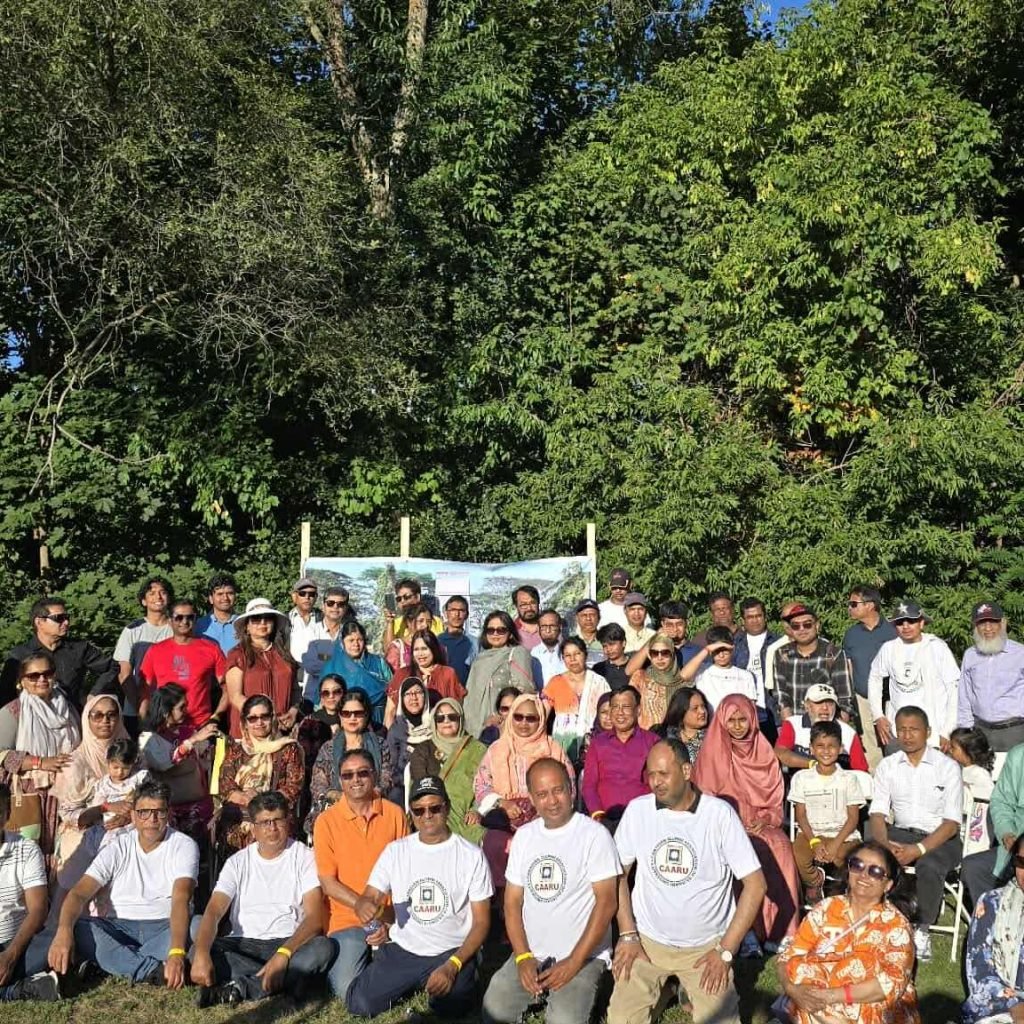
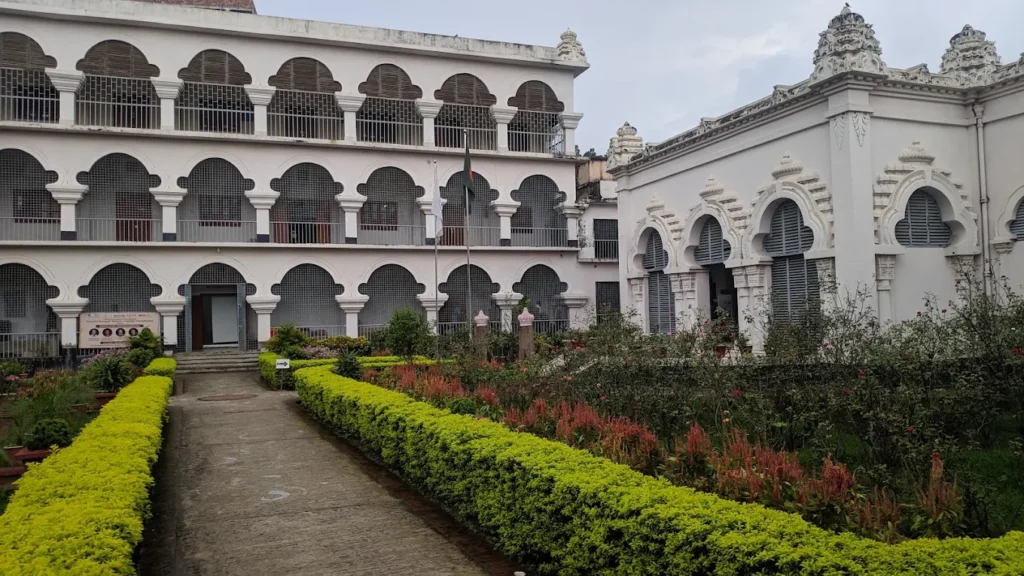
The campus of Rajshahi University isn’t just 753 acres of land; it’s a 753-acre canvas of memories. For every graduate, this place is a collection of sights, sounds, and unforgettable moments—a home we carry with us, even to the other side of the world in Canada.
From the ‘Shabash Bangladesh’ sculpture to the golden pillars of the Main Gate, we revisit the 10 iconic landmarks of Rajshahi University that live on in our memories. For those of us in the CAARU family, these spots are more than just brick and mortar; they are the backdrop to our best stories, our lifelong friendships, and the people we became.
A Walk Down Memory Lane: 10 Iconic Landmarks of Rajshahi University
This list isn’t just a guide; it’s a nostalgic journey. How many of these spots were part of your daily life?
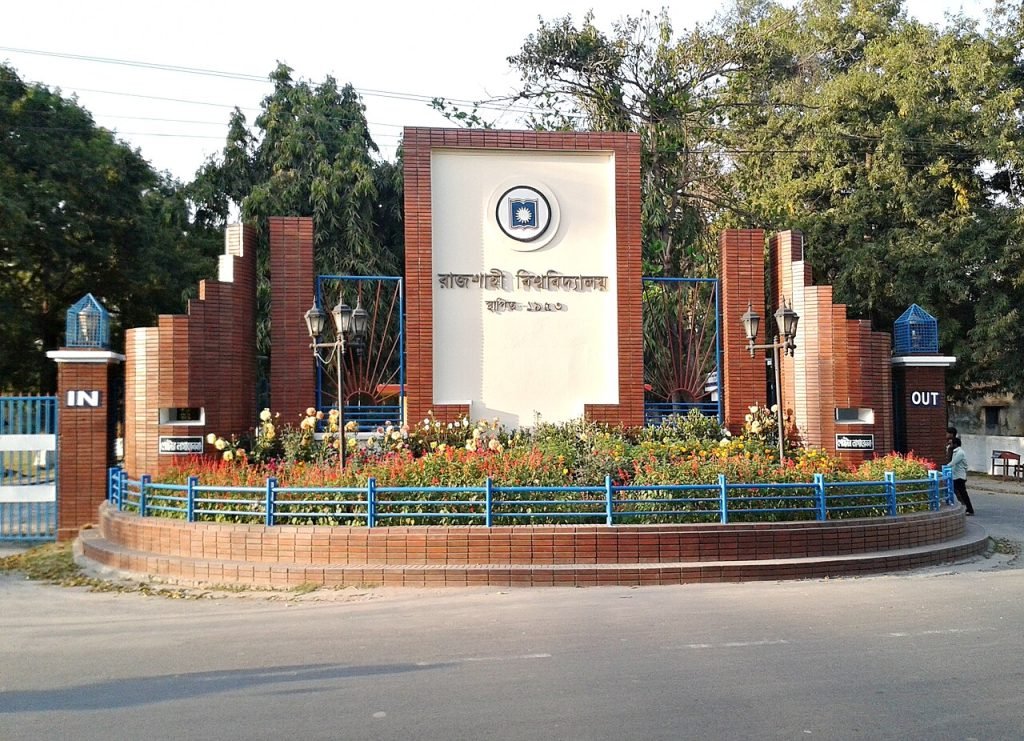
1. The Main Gate (Golden Jubilee Gate)
This is where it all began. Those golden pillars, gleaming in the Rajshahi sun, were the first things we saw as hopeful freshmen and the last things we passed through as proud graduates. It’s not just an entrance; it’s a symbol of our aspirations and achievements.
2. ‘Shabash Bangladesh’ Sculpture
Located just a short walk from the Main Gate, this powerful sculpture is the heart of the campus. It’s one of the most significant monuments to the Liberation War, depicting two freedom fighters, one of whom is injured. It was a constant, powerful reminder of our nation’s history and the price of freedom.
3. Paris Road
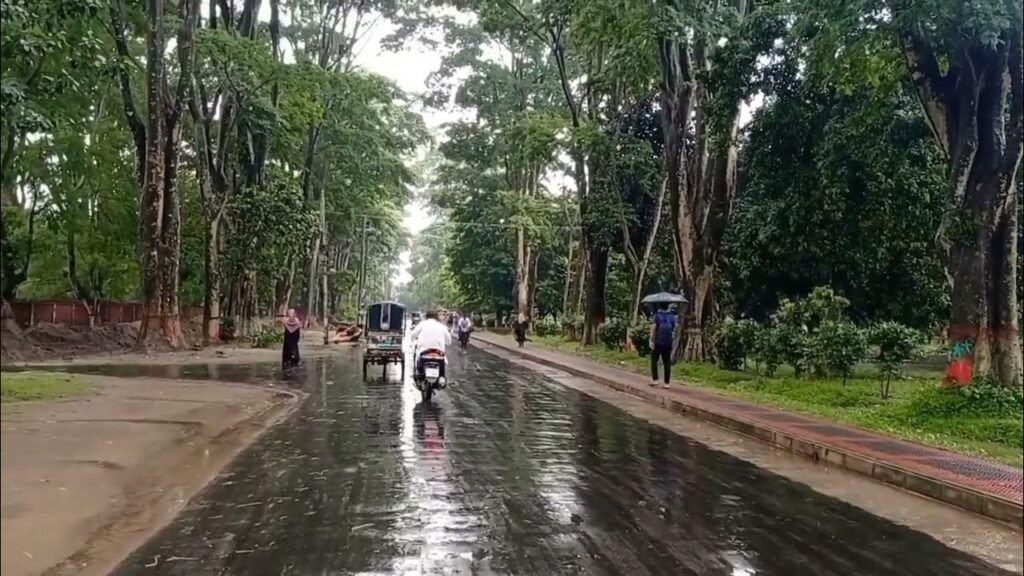
Was it really named after Paris? The legends vary. But for every RU student, this long, beautiful avenue shaded by towering sycamore trees was pure magic. Walking or cycling down Paris Road, especially after a rain shower or in the soft afternoon light, is a memory etched in our hearts.
4. Tukitaki Chattar
If the campus had a social hub, this was it. ‘Tukitaki Chattar’ was the legendary spot for ‘adda’ (chatting), tea, and casual gatherings. It was the place where friendships were forged, plans were made, and countless hours were spent debating everything from politics to poetry over a ‘shingara’.
5. The Central Library
The architectural marvel of the Central Library was a sight to behold. For diligent students, it was a sanctuary. For the rest of us, it was the landmark we’d point to with pride (and maybe the place we’d meet friends “after” studying). Its unique, layered design makes it one of the most recognizable buildings on campus.
6. The Central Shahid Minar
Standing tall and white, the RU Shahid Minar was our place to pay respect on ‘Ekushey February’ (February 21st). The solemn early morning processions, the gathering of flowers, and the shared sense of history made this one of the most emotionally significant spots on campus.
7. The Senate Bhaban
This modern architectural icon, with its distinctive circular design, was the center of the university’s administration and formal events. Seeing the Senate Bhaban meant something important was happening—be it a convocation, a high-profile seminar, or an official ceremony.
8. The Faculty of Arts (Kola Bhaban)
One of the oldest and most beautiful buildings, the Faculty of Arts, with its classic red brickwork and sprawling corridors, is the picture of academic heritage. Even if you weren’t an arts student, you’ve likely walked its halls or admired its timeless beauty.
9. Iblish Chattar
Yes, “Iblish” (Devil’s) Corner. This famous ‘adda’ spot near the arts building was the rebellious, intellectual counterpart to Tukitaki. It was the ground for free-thinkers, student activists, and artists. The name itself speaks to the spirited and often mischievous nature of campus life.
10. The Padma Riverbank (T-Badh)
While technically just outside the campus, the T-Badh (T-shaped dam) on the bank of the mighty Padma River was an essential part of the RU experience. Watching the sunset over the Padma, sharing a ‘badam’ (peanut) with friends, or just feeling the river breeze—these are the golden, peaceful moments that defined our student days.
A Legacy in Our Hearts
These places are more than just landmarks; they are the chapters of our youth. They witnessed our struggles, our triumphs, and our growth.
What’s your favorite RU campus memory? Which landmark holds a special place in your heart? Share your stories and photos on the official CAARU Facebook Page!
And if you are a Rajshahi University graduate living in Canada and not yet a member, Become a CAARU Member Today. Let’s reconnect and build new memories together.
You can also visit:Varendra Research MuseumPuthia Temple Complex
Best Kacha Golla
FAQ:
- Q: What is Rajshahi University famous for?
- A: Rajshahi University is one of the largest and most prestigious public universities in Bangladesh, famous for its beautiful 753-acre campus (often called the “Motihar Green Campus”), its high academic standards, and its significant role in the nation’s history.
- Q: What is ‘Paris Road’ at Rajshahi University?
- A: ‘Paris Road’ is the name of a picturesque, long avenue on the Rajshahi University campus. It is lined with tall, beautiful sycamore trees that create a canopy, making it a favorite and iconic spot for students and visitors.
- Q: What does the ‘Shabash Bangladesh’ sculpture represent?
- A: ‘Shabash Bangladesh’ is a famous sculpture on the RU campus that commemorates the 1971 Bangladesh Liberation War. It depicts two freedom fighters charging forward, symbolizing the courage and sacrifice of those who fought for independence.
- Q: How big is the Rajshahi University campus?
- A: The Rajshahi University campus is one of the largest in Bangladesh, spanning 753 acres (or 305 hectares) in Motihar, Rajshahi.
- Q: What is ‘Tukitaki Chattar’?
- A: ‘Tukitaki Chattar’ is a well-known open-air square on the RU campus, famous for its small tea stalls and benches. It serves as a central social hub where students gather for ‘adda’ (conversation), tea, and snacks.