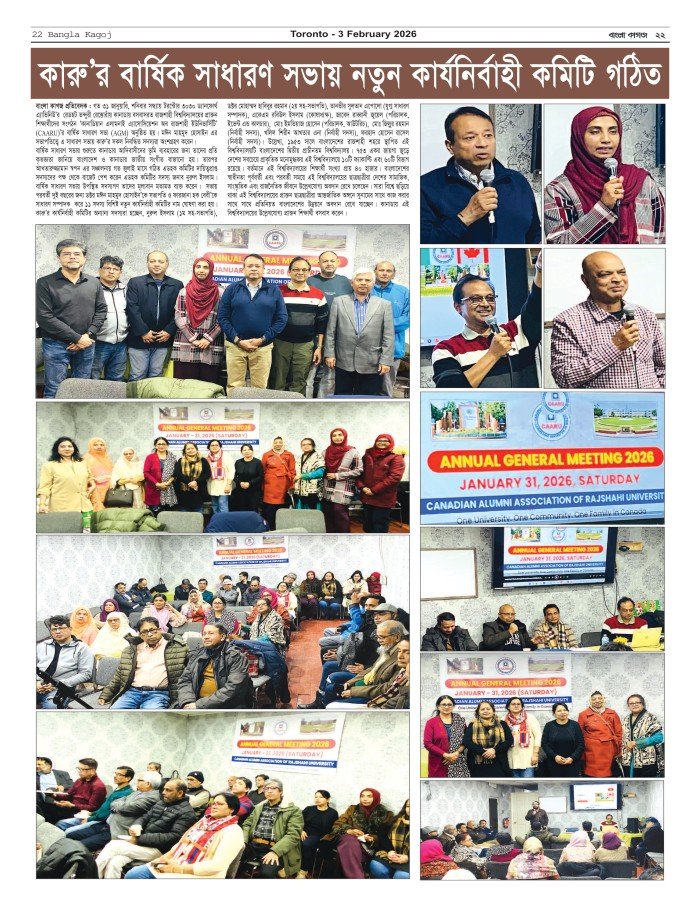
Remembering Ekushey: CAARU’s Tribute to Language Martyrs in Freezing Toronto
For a Bangladeshi, the 21st of February is not just a date on the calendar; it is an emotion deeply woven into our identity. It is a day of remembrance, of solemn pride, and of honoring the ultimate sacrifice made for our mother tongue, Bangla.
When you move thousands of miles away from home to Canada, the desire to hold onto these roots only grows stronger. This year, members of the Canadian Alumni Association of Rajshahi University (CAARU) braved the freezing, snow-covered night of Toronto to prove that the spirit of ‘Ekushey’ burns warmly in our hearts, no matter the temperature outside.
A Chilling Night, A Warm Tribute
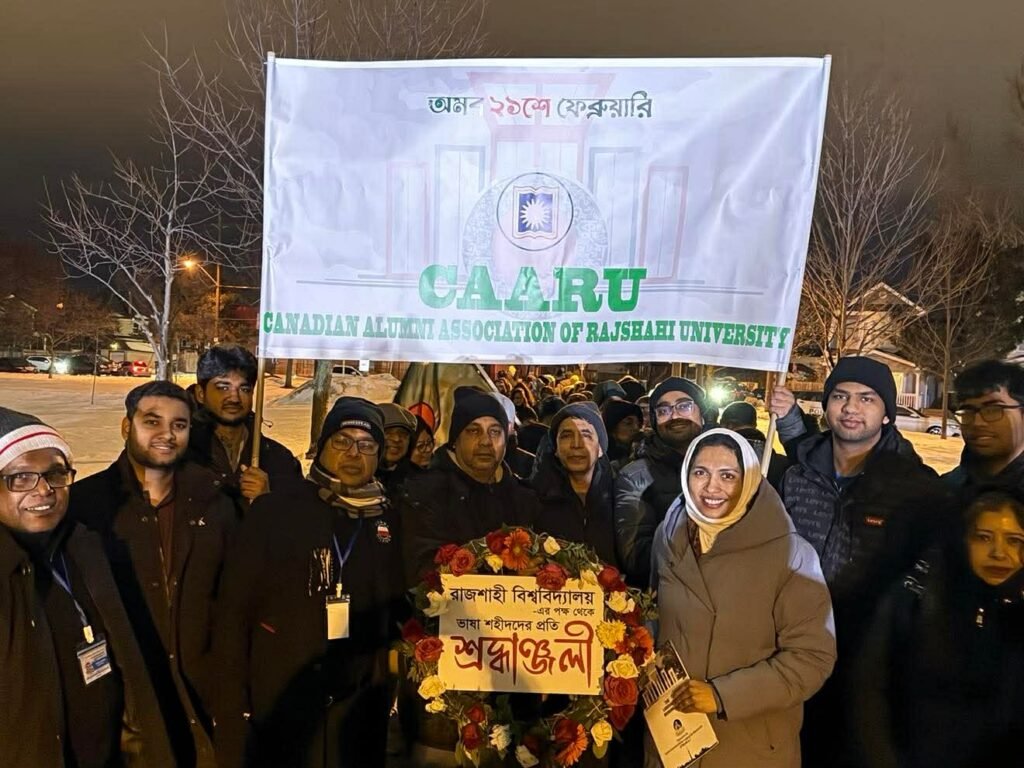
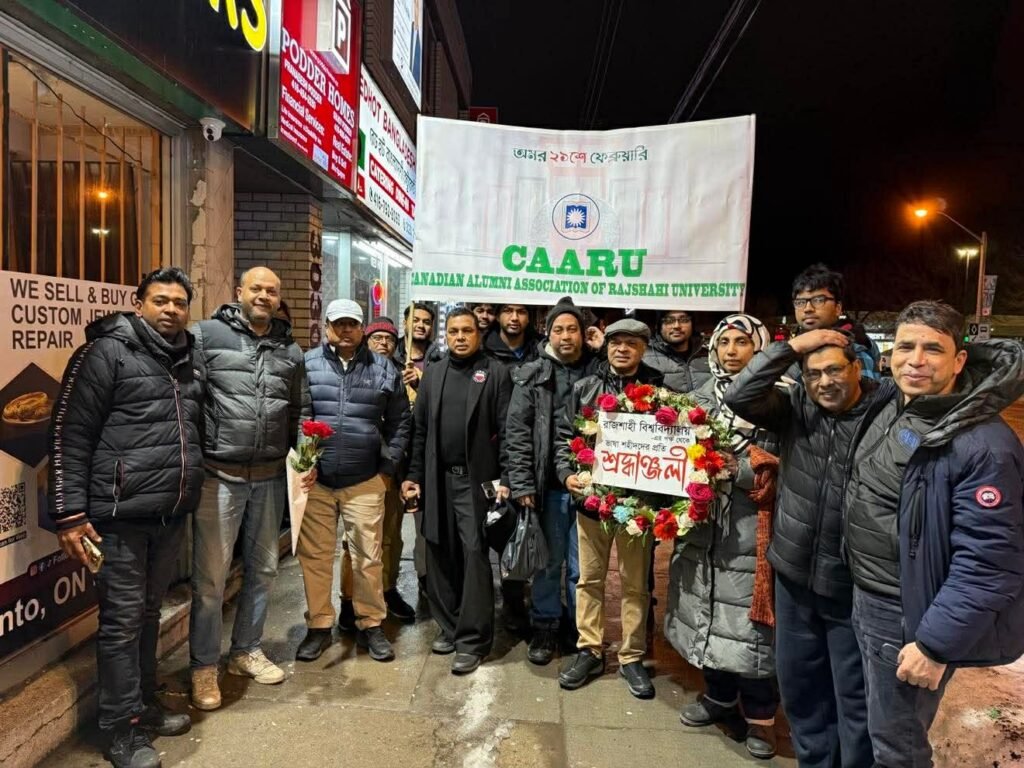
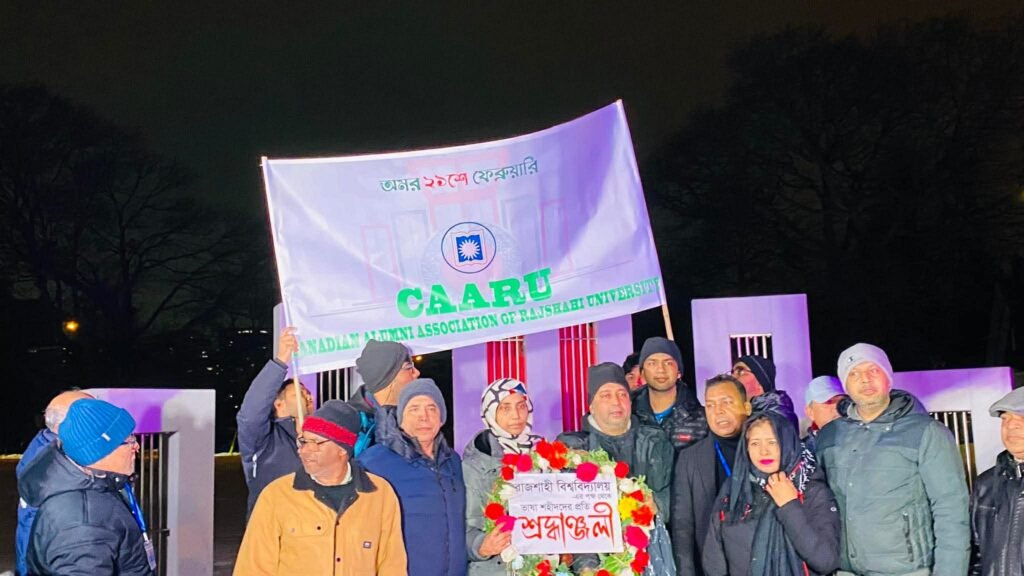
The image above captures the very essence of the CAARU family. Gathered together under the dark winter sky, with snow crunching beneath our boots and cold winds blowing, our members stood united.
Holding our official CAARU banner high, we proudly carried a beautiful floral wreath—a Shraddhanjali. The wreath, inscribed with Bengali words of respect on behalf of Rajshahi University (“ভাষা শহীদদের প্রতি শ্রদ্ধাঞ্জলি – রাজশাহী বিশ্ববিদ্যালয় এর পক্ষ থেকে”), was a poignant reminder of who we are and where we come from. Thick winter coats, beanies, and scarves could not hide the glowing smiles and the solemn pride on the faces of our alumni.
It was our own Canadian version of the Probhat Feri (morning procession), substituting the warm morning fog of Bangladesh for the icy chill of a Toronto winter night.
From Rajshahi’s Shahid Minar to Canadian Snow
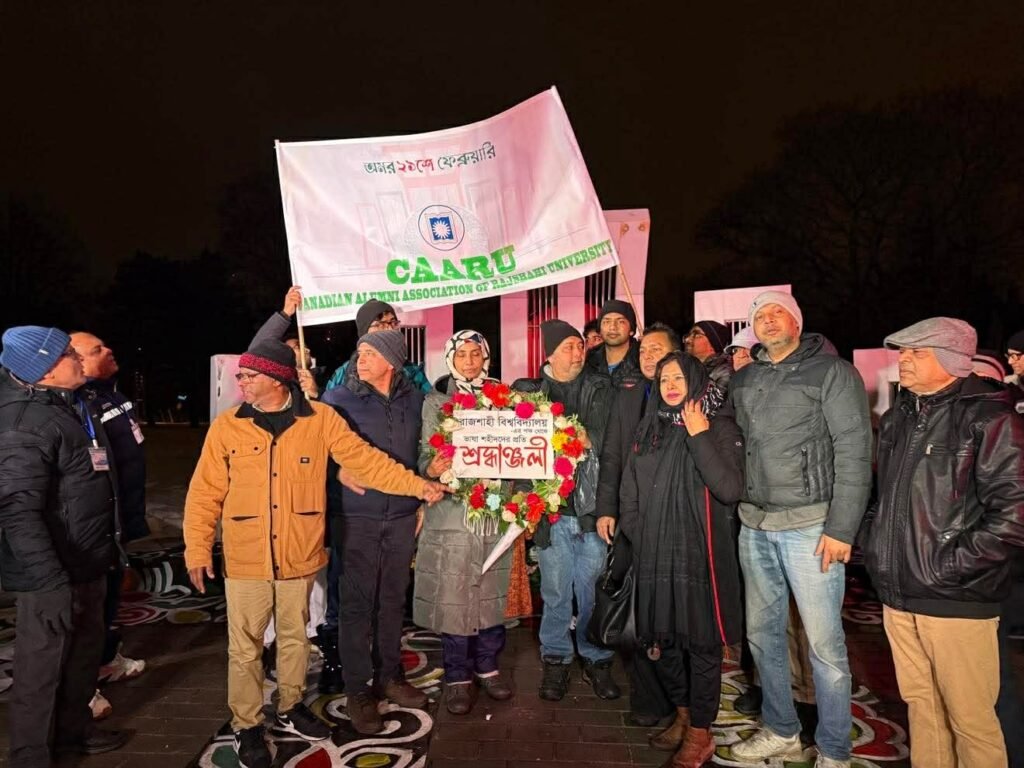
Standing there in the snow, it was impossible not to be transported back to our campus days.
For every Rajshahi University graduate, 21st February brings back a flood of memories. We remember the crisp, early mornings walking barefoot down the campus roads. We remember joining thousands of fellow students to lay flowers at the striking white structure of the RU Central Shahid Minar. The air would echo with the melancholic yet empowering notes of “Amar Bhaier Rokte Rangano Ekushey February, Ami Ki Bhulite Pari?”
Today, the landscape has changed. The Central Shahid Minar has been replaced by community monuments or improvised gathering spots in Canada, and our bare feet are now clad in heavy snow boots. But the reverence? That remains exactly the same.
Why We Keep the Spirit Alive
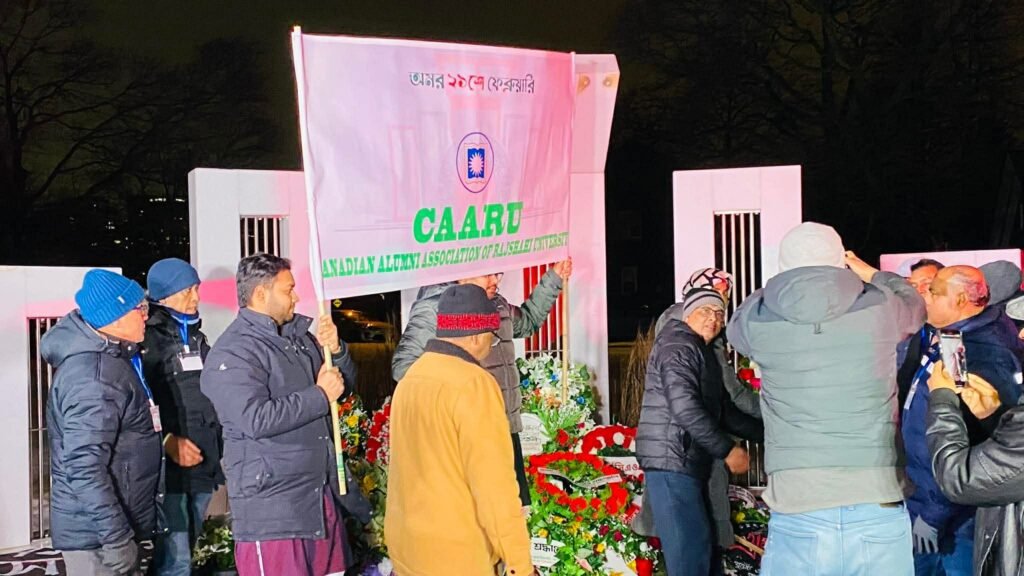
Observing International Mother Language Day as expats serves a vital dual purpose:
- Honoring the Past: We pay our deepest respects to Salam, Barkat, Rafiq, Jabbar, and Shafiur, who gave their lives in 1952 so we could speak our language freely.
- Inspiring the Future: By gathering out in the cold, holding banners, and singing our songs, we show our children—the next generation of Bangladeshi-Canadians—the heavy, beautiful legacy of the Bangla language.
The CAARU community is dedicated to ensuring that our culture, our language, and our shared history from Rajshahi University are never lost in translation. We are more than just an alumni network; we are the guardians of our heritage in a new homeland.
Did you join a 21st February event this year? We would love to see your photos and hear your memories of Ekushey on the RU campus. Share them with us on the official CAARU Facebook Page!
If you are an RU graduate living in Canada and want to be part of these meaningful cultural and community moments, Become a CAARU Member Today. Let’s keep our heritage alive, together.
FAQ:
A: Recognized globally by UNESCO, this day (Feb 21) promotes linguistic and cultural diversity and multilingualism. It was established specifically in tribute to the Bengali Language Movement.
Q: Why do Bangladeshis celebrate 21st February?
A: 21st February, or Ekushey February, marks the Bengali Language Movement of 1952. It honors the students and activists who were killed while peacefully protesting for the right to use Bangla as an official language.
Q: Does CAARU organize events for Ekushey February in Canada?
A: Yes, CAARU members actively participate in and organize community gatherings to pay tribute to the language martyrs, even braving the harsh Canadian winters to lay floral wreaths and sing traditional songs.
Q: What is the significance of International Mother Language Day?