
Puthia Temple Complex: A Visitor’s Guide to Bangladesh’s Largest Temple City
Just a short drive from our beloved Rajshahi University campus lies a place where history stands still, etched in magnificent terracotta. For many of us, the Puthia Temple Complex was a popular day trip, a journey back in time. It’s a living museum and a cornerstone of our Barendra region’s heritage, holding the largest number of historic Hindu temples in all of Bangladesh.
This guide is a journey to the Puthia Temple Complex, a chance to explore its stunning terracotta architecture. We’ll revisit the grand Govinda Temple, the towering Shiva Temple, and the iconic Puthia Rajbari, making it a perfect itinerary for your next visit home.
What Makes Puthia a “Temple City”?
Located just 30 kilometers from Rajshahi city, Puthia is not just one temple; it’s an extraordinary cluster of architectural marvels. These temples were built by the Puthia Raj, a philanthropic and powerful zamindar (landlord) family who rose to prominence in the 17th to 19th centuries.
The complex is centered around a large dighi (reservoir) and the imposing Puthia Rajbari, the family’s palace. The temples, varying in style and dedicated to different deities, create a unique and spiritually rich landscape. The entire complex is on the tentative list of UNESCO World Heritage Sites for its outstanding cultural value.
The Must-See Architectural Marvels
A walk through Puthia is a lesson in Bengal’s architectural history. While there are many small temples, a few key structures stand out as masterpieces.
The Puthia Rajbari (The Palace)
The first building to capture your attention is the Puthia Rajbari. Built in 1895 by Maharani Hemanta Kumari Devi, this grand palace is a stunning example of Indo-Saracenic architecture, blending Hindu, Islamic, and British colonial styles. Its white facade, wide verandahs, and soaring arches make it an unmissable landmark, perfect for photography.
The Govinda Temple (Pancharatna)
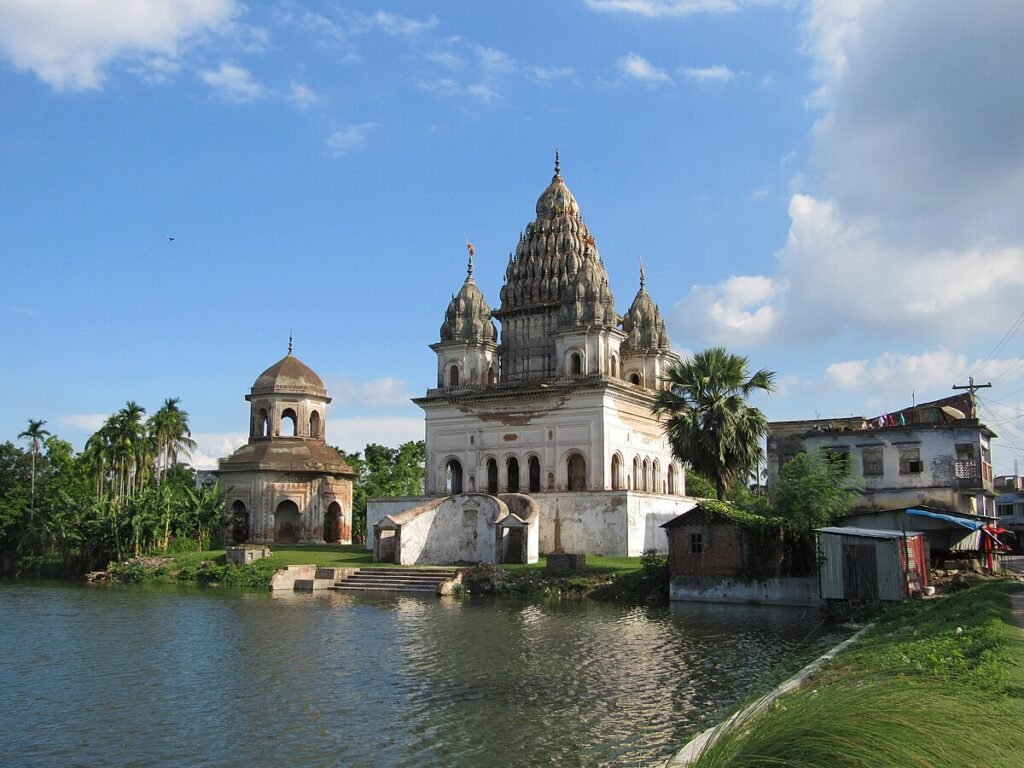
Considered by many to be the jewel of Puthia, the Govinda Temple (built between 1823 and 1895) is a true masterpiece of terracotta art. It’s a ‘Pancharatna’ (five-spired) temple, with a central tower surrounded by four smaller ones.
The entire exterior is covered in intricate terracotta plaques depicting scenes from Hindu epics like the Ramayana and Mahabharata, as well as the playful leelas of Krishna. The sheer density and artistry of the carvings are breathtaking.
The Shiva Temple (Bhubaneswar Temple)
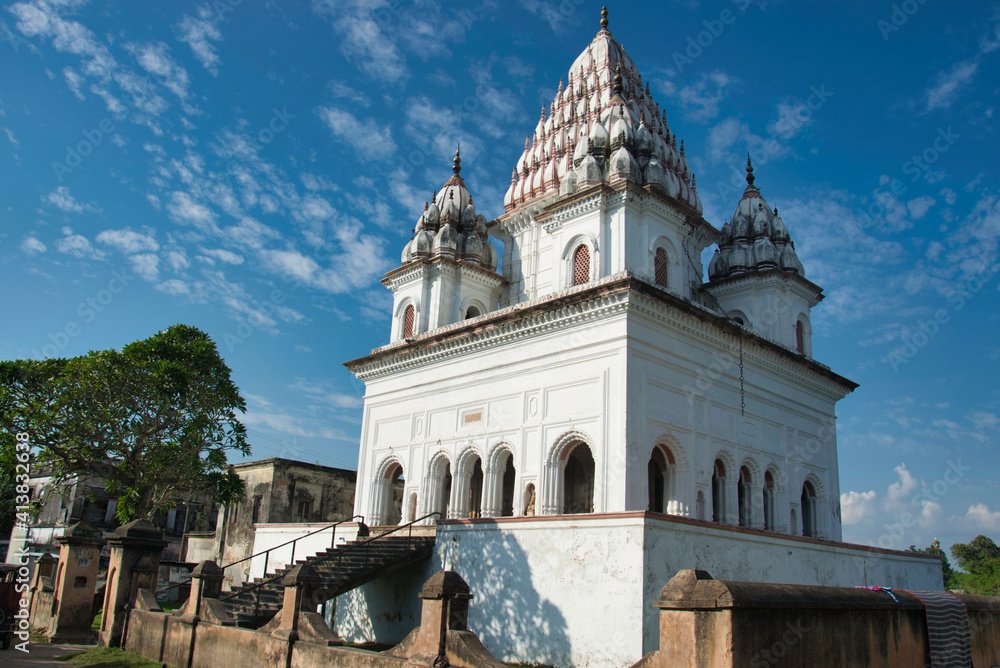
You cannot miss this one. The Shiva Temple, built in 1823 by Rani Bhubanomoyee Devi, is the largest Shiva temple in Bangladesh.
It’s a magnificent ‘Pancharatna’ temple, rising majestically over the complex. Its architecture is a beautiful example of the North Indian Nagara style, adapted to the Bengali landscape. Inside, it houses a massive black basalt Shiva Lingam, one of the largest in the country.
Other Notable Temples
- Jagannath Temple: A smaller but architecturally significant temple, built in the classic Jor-bangla (twin-hut) style, also featuring beautiful terracotta work.
- Charchala Temples: You’ll find several smaller temples in the Charchala (four-roofed) style, a common form in Bengali temple architecture.
Planning Your Visit: A Practical Guide
As an easy day trip from Rajshahi, a visit to Puthia requires just a little planning.
How to Get to the Puthia Temple Complex
Puthia is conveniently located right on the Rajshahi-Dhaka highway.
- From Rajshahi: It’s about a 40-50 minute journey. You can hire an auto-rickshaw (CNG) for a round trip, or take any of the frequent local buses heading towards Natore or Dhaka and ask to be dropped at Puthia.
- From Dhaka: It’s a popular stop for those traveling to Rajshahi by road.
Best Time to Visit & Tips
- Best Season: The winter months (October to March) offer the most pleasant weather for exploring the complex on foot.
- Best Time of Day: Go in the early morning or late afternoon. The soft light is perfect for photography, especially for capturing the details of the terracotta.
- Be Respectful: Remember, these are active places of worship. Dress modestly and be mindful of any religious ceremonies.
- Wear Comfortable Shoes: You will be doing a lot of walking on uneven paths and grassy lawns between the temples.
- Entry Fees: There are generally no entry fees for the complex itself, but small donations at the active temples are appreciated. The Rajbari may have a nominal entry ticket.
A Legacy We Share
The Puthia Temple Complex is more than just a tourist spot; it’s a vital piece of our Barendra heritage. For Rajshahi University alumni, it’s a proud reminder of the rich history that surrounded us during our student days.
Do you have photos or memories from your own visits to Puthia? Share them on the official CAARU Facebook Page! We’d love to see them.
And if you’re an RU graduate in Canada, Become a CAARU Member Today to connect with a community that shares your heritage and your journey.
Also visit: Varendra Research Museum
Pingback: Best Kacha Golla in Rajshahi: A Guide to History & Shops - CAARU
Pingback: 10 Iconic Landmarks of Rajshahi University (RU) We Love - CAARU